Affirmations
How to Use Audio Affirmations for Subconscious Reprogramming
Key Takeaways
- Audio affirmations make subconscious reprogramming easier because they pair repetition with emotional tone — two of the main inputs the subconscious uses to form beliefs.
- Listening during relaxed or low-analytical states — morning, before sleep, while commuting, or during light exercise — helps affirmations bypass the critical mind and land in the subconscious.
- The best tracks are present tense, first person, specific, spoken slowly, and backed by music that matches the emotional frequency of your chosen variation.
- A focused 7-day routine is more effective than a scattered playlist: one chosen variation, 3–5 affirmations, one consistent listening window.
- LoA's Track Builder lets you turn your personal affirmations into AI-voice audio tracks with background music and MP3 export.
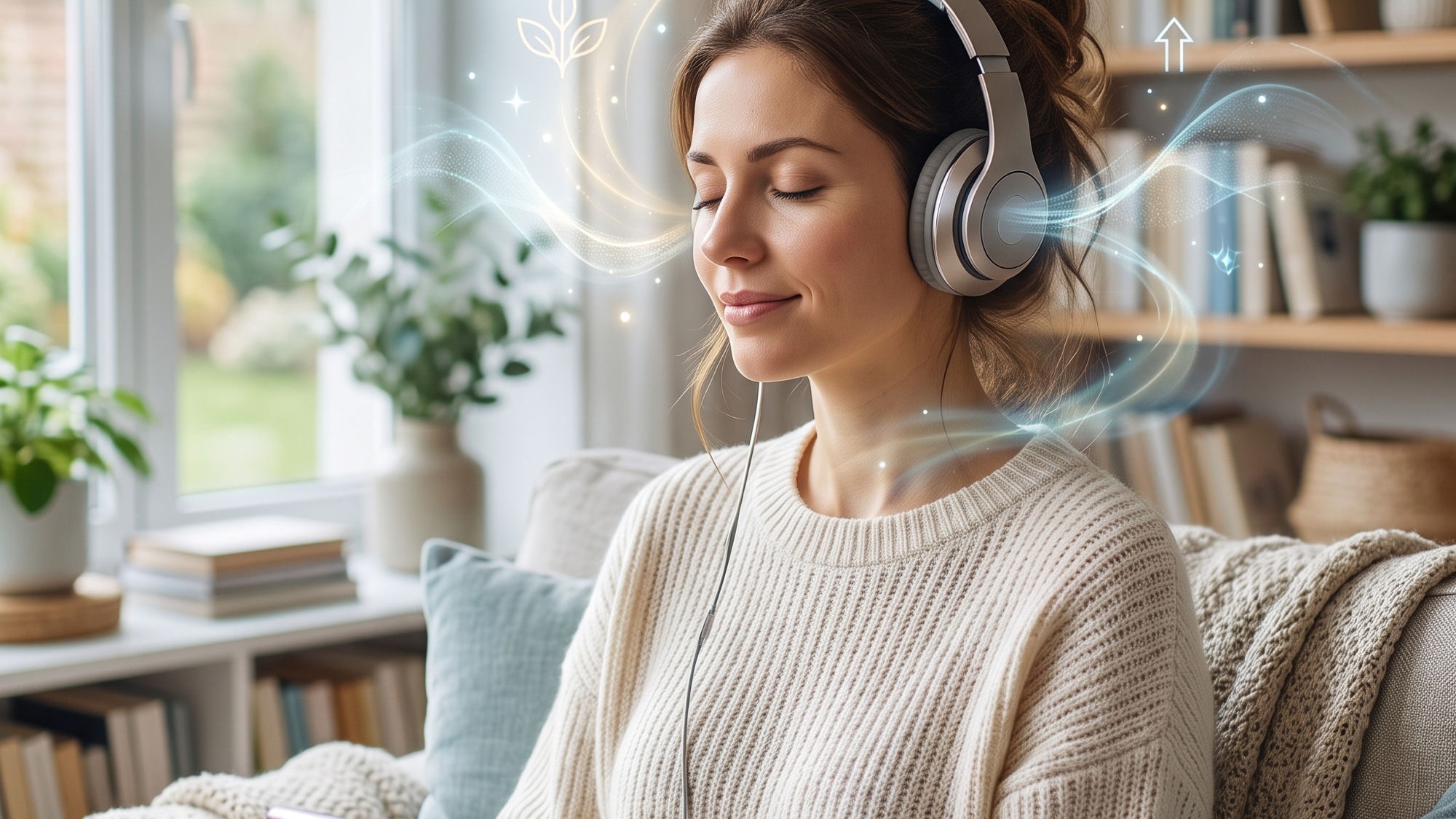
Audio affirmations for subconscious reprogramming turn the thoughts you want to believe into a soundscape you can return to again and again. The subconscious does not learn from a single inspiring moment. It learns from repeated exposure paired with emotional state. Listening to affirmations gives you both.
When you read affirmations, your analytical mind can argue, judge, or skip ahead. When you listen — especially in a relaxed state — the words flow around the critical filter and settle deeper. That is why many people find audio manifestation tracks more effective than silent reading alone.
In Transurfing terms, a well-made audio affirmation track is a tool for tuning your frequency to a chosen variation in the Space of Variations. You are not forcing a new reality. You are rehearsing the feeling of already living inside it.
Want to build your first track? LoA's Track Builder turns your saved affirmations into personalized audio with AI voice, background music beds, and MP3 export.
Why Audio Affirmations Work for Subconscious Reprogramming
The subconscious mind forms beliefs through three primary inputs:
- Repetition. Every time a thought pattern is repeated, the neural pathway associated with it becomes stronger and more automatic. Affirmation repetition is deliberate neuroplasticity.
- Emotion. The amygdala tags emotionally significant experiences for long-term storage. An affirmation felt as true is stored more deeply than one spoken mechanically.
- State. The brain is most impressionable in theta and alpha states — early morning, deep relaxation, meditation, and the edge of sleep. In these states the critical filter is lower and the subconscious is more receptive.
Audio affirmations hit all three inputs at once. The repetition is built into the track. The emotional tone is carried by your voice, the speaker's voice, and the music. And because listening is passive, you can consume affirmations while your conscious mind is occupied with something simple — walking, commuting, or falling asleep — leaving the subconscious open.
The reticular activating system starts filtering for proof
When you repeatedly hear "I am confident and capable in every conversation," your reticular activating system begins to notice evidence that supports the claim. You become more aware of moments when you do speak confidently, and less focused on moments when you do not. Over time, this selective attention reshapes your self-concept.
When to Listen to Audio Affirmations
Not every listening window is equal. Choose moments that match your goal and your environment.
Morning: set the day's frequency
Within the first 20–30 minutes of waking, the brain is still in an alpha-hypnopompic state. Listening to affirmations here sets the emotional tone for the day. It is one of the best times for morning affirmation routines.
Before sleep: plant beliefs overnight
The hypnagogic state just before sleep is highly receptive. Listening to affirmations then gives your subconscious material to consolidate during the night. This is especially useful for sleep manifestation work.
While commuting or walking
Passive travel time is ideal for audio affirmations because your body is busy but your mind is free. Keep the volume comfortable and the content familiar.
During light exercise
Light movement increases blood flow and theta activity, making exercise a good window for subconscious reprogramming audio. Avoid listening during high-intensity workouts where breath and form matter more.
Safety note: Do not listen to affirmations while driving or operating machinery if the track is hypnotic, sleep-focused, or unusually loud. Use these sessions only when your full attention is not required.
How to Build an Audio Affirmation Practice
A scattered playlist produces scattered results. Build your practice around one chosen variation at a time.
- Pick one area. Choose the belief you most want to shift: confidence, money, love, health, or creative output. One area per 21–30 day cycle.
- Select 3–5 affirmations. Fewer is better. These should be present tense, first person, specific, and emotionally believable.
- Choose a voice that feels like you. Your own voice is powerful, but many people feel self-conscious. A calm AI voice or a trusted narrator can work just as well. The key is that the voice feels believable, not foreign.
- Add music that matches the goal. Wealth affirmations pair well with warm, expansive pads. Confidence tracks benefit from steady, driving rhythms. Love and healing tracks often feel better with soft, flowing instrumentation.
- Loop 2–3 times per session. Repetition is the mechanism. One pass is entertainment; three passes is programming.
- Listen daily for 21–30 days. Belief-level change requires consistency. Track your streak and notice emotional shifts before external results.
LoA's Track Builder is built for this workflow: save your affirmations, pick an AI voice, layer a background music bed, adjust spacing and repetition, then export an MP3 you can listen to anywhere.
What Makes a Good Audio Affirmation
Not all affirmation audio is equal. A high-quality track follows a few simple rules:
- Present tense. "I am attracting abundance" lands better than "I will attract abundance." The subconscious responds to what it is told is true now.
- First person. "I" statements create identity-level shifts. They are harder to dismiss than general motivational phrases.
- Specific. "I earn $10,000 per month" is more concrete than "I have money." Specificity gives the subconscious a clear target.
- Emotionally resonant. The affirmation should produce a slight shift in feeling when you hear it. If it feels flat, rewrite it.
- Spoken slowly with pauses. The subconscious needs time to absorb each statement. Rushed affirmations lose impact.
- Music that supports, not competes. Background music should match the emotional tone and stay below the voice in the mix.
If you are building your own track, test it once and notice your physical response. Do you feel slightly more open, more certain, more calm? That is the signal that the track is working.
Tools That Help: Track Builder vs. Generic Apps
You can record affirmations on a voice memo app, compile a playlist of existing affirmation videos, or use a dedicated tool. Each option has trade-offs.
| Option | Pros | Cons |
|---|---|---|
| Voice memos | Free, uses your own voice | No background music, no looping, no spacing control |
| Streaming affirmation playlists | Ready to listen | Generic, not tied to your goals, ads and distractions |
| LoA Track Builder | Your affirmations, AI voice, music beds, loops, MP3 export | Premium feature (core affirmations remain free) |
Track Builder is designed for people who want a personalized subconscious reprogramming audio workflow. You bring the affirmations, and the tool handles voice, music, repetition, and export. See the features overview or pricing page for plan details.
Common Mistakes to Avoid
- Too many affirmations at once. A 20-minute track packed with unrelated goals scatters focus. Pick 3–5 affirmations around one chosen variation.
- Listening while stressed or multitasking heavily. The subconscious encodes best in a calm or lightly occupied state. Heavy multitasking splits attention and weakens encoding.
- Giving up too early. Neural pathways take time to strengthen. Most people notice emotional shifts in 1–2 weeks and belief changes in 21–45 days.
- Using a voice that feels fake. If the voice sounds like a stranger, the affirmation may not land. Use your own voice or a voice you can imagine as an aligned version of yourself.
- Ignoring the music. Music that clashes with the affirmation's emotion creates cognitive friction. Match the mood.
A 7-Day Audio Affirmation Routine
This routine rotates through common life areas so you can test which variation feels most alive. After day 7, return to the area that produced the strongest emotional response and continue for 21–30 days.
| Day | Focus | Sample affirmation | Listening window |
|---|---|---|---|
| 1 | Wealth & abundance | "Money flows to me easily from expected and unexpected sources." | Morning, before sleep |
| 2 | Confidence | "I trust myself completely and I speak with calm clarity." | Before a meeting or event |
| 3 | Health & vitality | "My body is strong, energized, and healing more every day." | During a walk |
| 4 | Love & relationships | "I am deeply loved and I attract healthy, supportive connections." | Evening reflection |
| 5 | Creative output | "Creative ideas flow through me freely and I act on them with ease." | While creating |
| 6 | Gratitude & alignment | "I am grateful for everything that is unfolding in my favor." | Morning gratitude window |
| 7 | Chosen variation review | "I am already living in my chosen variation and I feel it now." | Before sleep |
For a fuller gratitude practice, pair this with the gratitude practice guide.
Frequently Asked Questions
Can I listen to affirmations while sleeping?
Yes. The subconscious is highly receptive during the first 30–60 minutes of sleep. Listening to affirmations as you fall asleep can accelerate subconscious reprogramming. Keep the volume low and use a looping track without sudden changes.
How long should an audio affirmation track be?
Three to seven minutes is ideal for daily practice. That is enough time to loop 3–5 affirmations two or three times with pauses. Longer tracks are fine, but consistency matters more than length.
Do I need headphones?
Headphones help with focus and reduce external distractions, especially in public spaces. They are not required. What matters most is that you can hear the words clearly and the emotional tone reaches you.
Can I use someone else's voice?
Yes. A calm, believable narrator or AI voice can work well. The subconscious responds to the emotional quality and repetition more than the specific voice. If a voice feels authoritative and aligned, it will encode more easily.
How is Track Builder different from a playlist?
A playlist plays other people's affirmations. Track Builder turns your own affirmations into a custom audio track with AI voice, background music, loops, and MP3 export. It is built for subconscious reprogramming, not passive listening.
How often should I listen to audio affirmations?
Once or twice a day for 21–30 days is the sweet spot. Morning and before sleep are the most powerful windows. Add a midday session if you want to reinforce a specific belief before an important event.
Can audio affirmations replace written affirmations?
They complement each other. Writing engages motor encoding and conscious reflection. Listening bypasses the analytical mind and reaches the subconscious more directly. A complete practice often includes both.
Start Turning Passive Time Into Subconscious Reprogramming Time
Audio affirmations are one of the simplest ways to make subconscious reprogramming part of your daily life. You do not need extra willpower — just a track, a listening window, and repetition.
Start with one chosen variation, 3–5 affirmations, and a 7-day streak. Notice how your emotional baseline shifts before you look for external proof. Then keep going.
Ready to build your own track? Try Track Builder in LoA and turn your affirmations into personalized subconscious reprogramming audio.
Yosuke Sakurai is the founder of LoA — a Law of Attraction app built on the belief that consistent daily practice transforms mindset and outcomes. He created LoA after studying manifestation techniques, positive psychology research, and habit formation science, then applying them in his own life. He writes about affirmations, visualization, scripting, and the neuroscience behind deliberate mindset work.